


Program · 17 Jul 2026
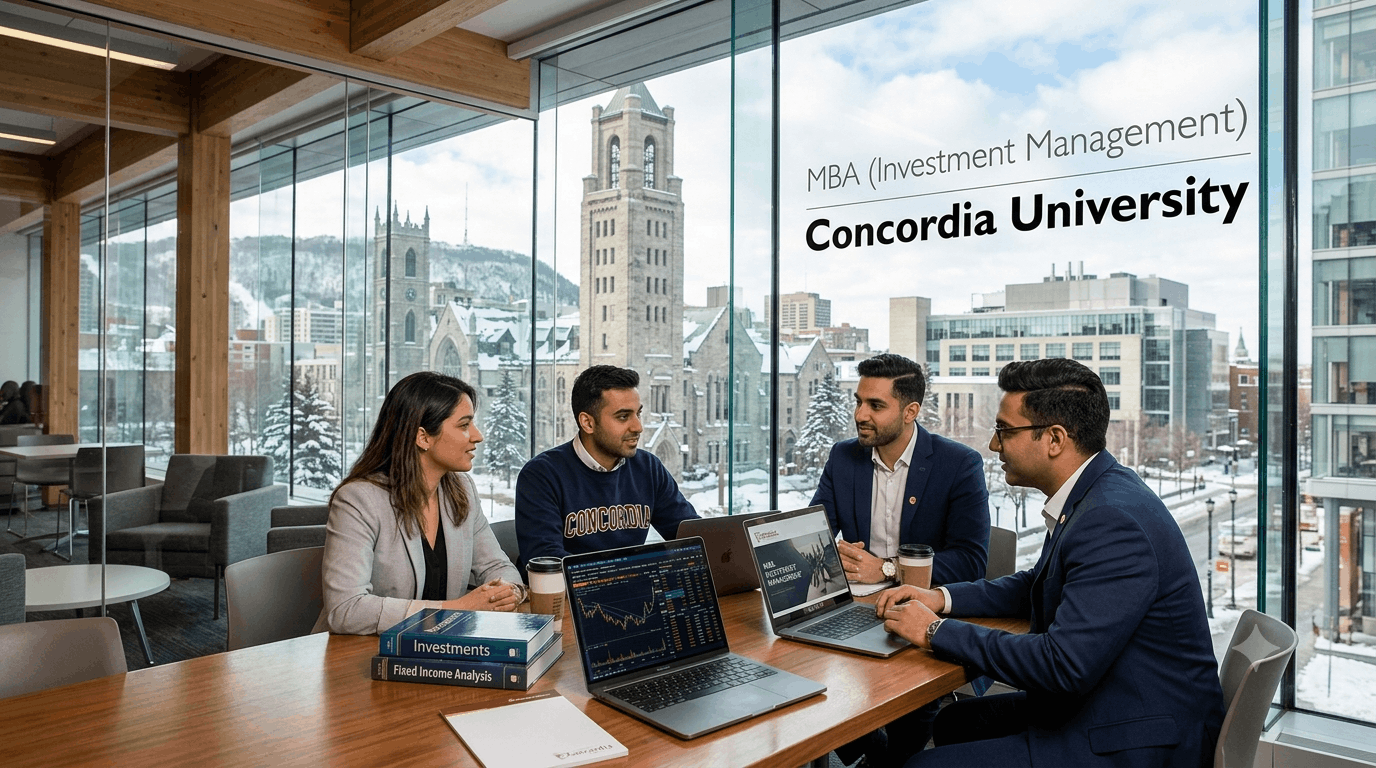
MBA (Investment Management) at Concordia University
The MBA (Investment Management) at Concordia University is a specialised postgraduate programme designed for students w...
Read More
Free consultation — no commitment required.
Trusted support to help you study abroad with confidence.

Admission Rate
98%
Across all destinations
Avg. Cost Savings
₹20L*
vs. self-managed admissions
300+
Partner Universities
50+
Destinations Covered
98%
Admission Rate
₹20L*
Avg. Cost Savings
*vs. self-managed admissions
Study MBA Overseas
Explore Top Countires Offering Renowned MBA Programs
Program · 17 Jul 2026
The MBA (Investment Management) at Concordia University is a specialised postgraduate programme designed for students w...
Read More
Program · 16 Jul 2026
The MBA 90 ECTS at ISM is a full-time, practice-focused programme designed for professionals who want to develop advanc...
Read More
Program · 13 Jul 2026
The Master of Business Administration at California Lutheran University is a flexible, ACBSP-accredited programme built...
Read MoreChoose career-focused programs built to help you grow and succeed.
Follow these simple steps to start your study abroad journey
Choose the best universities and programs based on your goals.
Prepare and complete required standardized tests.
Submit your application to selected universities.
Complete visa process and prepare for departure.
Everything you need to know before you begin your study abroad journey
Studying an MBA overseas refers to pursuing a management degree from a foreign university outside your home country. It typically involves international exposure, globally recognised curricula, diverse peer groups, and access to foreign job markets, making it a popular choice for professionals aiming for global careers.
An MBA overseas offers advantages such as international work exposure, global networking, and higher post-MBA salary potential. While Indian MBAs are valuable domestically, overseas MBAs are often preferred for roles in multinational companies, global consulting firms, and leadership positions requiring cross-border experience.
The most popular countries for MBA overseas include the USA, UK, Canada, Germany, and Australia. These destinations are known for globally ranked business schools, strong employer demand, post-study work options, and internationally recognised MBA degrees with high return on investment.
Most MBA programs overseas prefer candidates with 2–5 years of professional work experience. Top universities often value leadership exposure and career progression more than job titles. Some early-career or specialised MBA programs may consider applicants with slightly less experience.
GMAT or GRE scores are commonly required for top MBA universities overseas, especially in the USA and high-ranked schools globally. However, many universities offer test waivers based on strong academics, work experience, or quantitative backgrounds, particularly in mid-tier or applied programs.
An MBA overseas typically takes 1–2 years, depending on the country and program format. One-year MBAs are common in the UK and parts of Europe, while two-year MBAs, often with internships, are more prevalent in the USA, Canada, and Australia.
Yes, most countries allow international MBA students to work part-time during studies, usually up to 20 hours per week. This helps manage living expenses and gain local experience, although employment rules and limits vary by country and visa type.
Yes, students pursuing an MBA overseas can apply for merit-based, leadership, diversity, government-funded, and university-specific scholarships. While fully funded options are limited, many applicants receive partial tuition support, significantly improving the overall affordability of an MBA abroad.
Most top MBA destinations offer post-study work visas, allowing graduates to gain international professional experience. Countries like the USA, Canada, UK, Germany, and Australia provide structured pathways that help students transition from education to employment after graduation.
MBA graduates overseas commonly work in roles such as management consultant, product manager, strategy analyst, investment banking associate, marketing manager, and operations manager. The exact role depends on specialisation, prior experience, and the job market of the study destination.
Yes, an MBA overseas strengthens long-term career growth by providing international exposure, global alumni networks, and leadership training. Graduates often progress into senior roles across multinational organisations, startups, or global markets, enhancing career mobility and earning potential.
Quick Overview:
Choosing where to pursue an MBA is one of the biggest decisions you'll make. Every country has its own strengths, whether it's globally ranked business schools, affordable tuition, shorter program durations, or better post-study work opportunities. The best destination depends on your budget, career plans, preferred industry, and where you see yourself working after graduation. Below are some of the most popular countries for studying an MBA abroad.
Best Overseas MBA for Indians Students:
The USA is home to many of the world's leading business schools and offers the widest choice of MBA programs. Whether you're aiming for investment banking, consulting, technology, or entrepreneurship, American universities provide strong industry connections and extensive alumni networks.
| Feature | Details |
|---|---|
| Top Universities | University of Chicago (Booth), Columbia University, Northwestern University (Kellogg), NYU Stern |
| QS World University Rankings 2027 | Chicago #24, Columbia #=43, Northwestern #=45, NYU #58 |
| Program Duration | 12–24 months |
| Tuition Fees | USD 15,064–91,172/year (approx. ₹13 lakh–₹79 lakh) |
| Post-Study Work | OPT (12 months) + STEM OPT extension for eligible programs |
The UK is a popular choice for students who want to complete an MBA in a shorter time. Most full-time programs take just one year, allowing graduates to return to the workforce sooner while studying at internationally respected business schools.
| Feature | Details |
|---|---|
| Top Universities | London Business School, University of Oxford, University of Cambridge, Imperial College London |
| QS World University Rankings 2027 | Imperial #2, Oxford #4, Cambridge #6 |
| Program Duration | 12–21 months |
| Tuition Fees | GBP 17,000–123,950 (approx. ₹19.5 lakh–₹1.42 crore) |
| Post-Study Work | Graduate Route Visa (up to 2 years) |
An MBA in Canada combines globally recognized education with practical learning and excellent post-study work opportunities. Canadian business schools are known for their diverse classrooms, industry projects, and strong graduate employment outcomes.
| Feature | Details |
|---|---|
| Top Universities | University of Toronto (Rotman), McGill University, UBC (Sauder), Western University (Ivey) |
| QS World University Rankings 2027 | McGill #30, Toronto #32, UBC #45 |
| Program Duration | 12–24 months |
| Tuition Fees | CAD 43,890–146,410 (approx. ₹30.1 lakh–₹1.00 crore) |
| Post-Study Work | Post-Graduation Work Permit (PGWP) for eligible graduates (up to 3 years) |
Germany has become a preferred destination for students looking for a high-quality MBA with comparatively lower tuition than many English-speaking countries. It also offers strong career prospects in manufacturing, automotive, consulting, and technology.
| Feature | Details |
|---|---|
| Top Universities | Mannheim Business School, ESMT Berlin, Frankfurt School, TUM |
| QS World University Rankings 2027 | TUM #25 |
| Program Duration | 12–24 months |
| Tuition Fees | EUR 47,000+ (approx. ₹47 lakh+) |
| Post-Study Work | Up to 18 months |
Australia attracts MBA students with its globally ranked universities, multicultural campuses, and close links with employers across the Asia-Pacific region. Many programs focus on leadership, innovation, and practical business skills.
| Feature | Details |
|---|---|
| Top Universities | Melbourne Business School, UNSW, Monash University, University of Sydney |
| Program Duration | 12–24 months |
| Tuition Fees | AUD 60,000–120,000 (approx. ₹34 lakh–₹68 lakh) |
| Post-Study Work | Temporary Graduate Visa for eligible graduates |
France is well known for its prestigious business schools and one-year MBA programs. It is particularly attractive for students interested in luxury brand management, international business, and consulting.
| Feature | Details |
|---|---|
| Top Universities | HEC Paris, INSEAD, ESSEC Business School |
| Program Duration | 10–16 months |
| Tuition Fees | EUR 50,000–109,860 (approx. ₹50 lakh–₹1.10 crore) |
| Post-Study Work | Temporary residence permit for eligible graduates |
Ireland has emerged as a strong destination for MBA students thanks to its growing technology, pharmaceutical, and financial services sectors. Many business schools maintain close relationships with multinational employers operating in Europe.
| Feature | Details |
|---|---|
| Top Universities | UCD Smurfit School, Trinity College Dublin |
| Program Duration | 12–24 months |
| Tuition Fees | EUR 35,000–40,000 (approx. ₹35 lakh–₹40 lakh) |
| Post-Study Work | Third Level Graduate Scheme (up to 2 years) |
Singapore has established itself as one of Asia's leading education and business hubs. Its MBA programs are known for their international outlook, strong corporate partnerships, and excellent opportunities in finance, technology, and consulting.
| Feature | Details |
|---|---|
| Top Universities | National University of Singapore (NUS), Nanyang Technological University (NTU), Singapore Management University (SMU) |
| Program Duration | 12–17 months |
| Tuition Fees | SGD 70,000–99,953 (approx. ₹46 lakh–₹66 lakh) |
| Post-Study Work | Employment opportunities subject to Singapore's prevailing work pass regulations |
Choosing the right university is just as important as choosing the right country. Some business schools are known for finance and consulting, while others excel in entrepreneurship, technology, or leadership development. The best MBA university for you should align with your career goals, budget, preferred specialization, and the region where you plan to build your career.
Below are some of the world's leading universities offering MBA programs across popular study destinations.
| Country | Top University | QS World University Rankings 2027 |
|---|---|---|
| USA | University of Chicago (Booth) | #24 |
| USA | Columbia University | #=43 |
| Canada | McGill University | #30 |
| Canada | University of Toronto | #32 |
| UK | Imperial College London | #2 |
| UK | University of Oxford | #4 |
| Germany | Technical University of Munich (TUM) | #25 |
| Australia | University of Melbourne | #19 |
| France | HEC Paris* | Specialized Business School |
| Ireland | Trinity College Dublin | #75 |
| Singapore | National University of Singapore (NUS) | #8 |
Note: HEC Paris is a specialized business school and is not included in the QS World University Rankings. It is widely recognized through global business school and MBA rankings.
One of the biggest advantages of studying an MBA abroad is the flexibility to choose a specialization that matches your career goals. Universities around the world offer industry-focused MBA programs designed to prepare students for leadership roles across finance, technology, healthcare, consulting, and other fast-growing sectors. Choosing the right specialization can shape your career opportunities long after graduation.
Below are some of the most popular MBA specializations offered by universities abroad.
Finance remains one of the most in-demand specialisations for an MBA overseas, particularly at schools near major financial hubs like New York, London, or Frankfurt, preparing graduates for investment banking, corporate finance, and asset management roles.
Business Analytics combines core management training with data-driven decision- making, genuinely popular at schools like Chicago Booth and increasingly offered as a standalone specialised master's alongside the traditional MBA.
Marketing specialisations train students in brand management, digital marketing, and consumer behaviour, with schools like Northwestern Kellogg building a genuine global reputation specifically around this track.
International Business specialisations prepare graduates for cross-border trade, global strategy, and multinational operations, a natural fit for programmes with genuinely diverse, international cohorts.
Consulting-track MBAs lean heavily on case-study methodology and employer partnerships, with schools like INSEAD and HEC Paris maintaining direct recruiting pipelines into McKinsey, BCG, and Bain.
Entrepreneurship specialisations, strong at schools like WHU in Germany, focus on venture creation, startup finance, and "learning by doing," often producing genuine unicorn founders among alumni.
HR-focused MBAs prepare graduates for talent management, organisational development, and people strategy roles, with universities like Sunderland offering CIPD- aligned content specifically for this track.
Supply Chain specialisations combine operations, logistics, and procurement training, increasingly valuable given global disruptions to manufacturing and trade networks over the past several years.
The admission requirements for an MBA overseas vary by country and university, but most business schools look for a combination of academic performance, professional experience, language proficiency, and supporting application documents. Some universities also offer GMAT/GRE waivers, making the admission process more flexible for eligible candidates.
Below are the common eligibility requirements for an MBA abroad:
| Requirement | Details |
|---|---|
| Bachelor's Degree | A recognized undergraduate degree from an accredited university. Most institutions accept applicants from any academic discipline. |
| Academic Performance | Universities generally expect a competitive GPA or equivalent percentage, though the minimum requirement varies by institution. |
| Work Experience | Many MBA programs prefer 2–5 years of full-time professional experience. However, some universities also admit recent graduates through early-career MBA programs. |
| GMAT/GRE Score | Required by some universities, while many now offer GMAT/GRE waivers or have made these tests optional for eligible applicants. |
| English Language Proficiency | International applicants are usually required to submit IELTS, TOEFL, or PTE Academic scores unless they qualify for an exemption. |
| Statement of Purpose (SOP) | A personal statement explaining your academic background, career goals, and reasons for choosing the MBA program. |
| Letters of Recommendation (LORs) | Most universities ask for one to three recommendation letters from employers, managers, or academic referees. |
| Resume/CV | An updated resume highlighting your education, work experience, leadership roles, achievements, and extracurricular activities. |
| Interview | Some business schools conduct an admissions interview to assess your communication skills, leadership potential, and career aspirations. |
| Valid Passport and Student Visa | After receiving an admission offer, international students must obtain a valid passport and meet the student visa requirements of their chosen country. |
Applying for an MBA overseas may seem overwhelming at first, but breaking it into clear steps makes the process much easier. From choosing the right business school to securing your student visa, each stage builds on the previous one. Starting early also gives you enough time to prepare strong application documents and meet university deadlines without unnecessary stress.
Follow these steps to apply for an MBA abroad:
One of the first things to check before applying for an MBA overseas is the intake schedule. Universities across different countries accept applications at different times of the year, and not every business school offers all intakes. Applying early gives you a better chance of securing admission, scholarships, and enough time to complete your visa and accommodation arrangements.
MBA Intake Months by Country:
| Country | Main MBA Intakes | Most Popular Intake |
|---|---|---|
| USA | Fall (August/September), Spring (January), Summer (May, limited) | Fall (August/September) |
| Canada | Fall (September), Winter (January), Summer (May, limited) | Fall (September) |
| UK | September, January (selected universities) | September |
| Australia | February, July, November (varies by university) | February |
| Germany | Winter (October), Summer (April, selected programs) | October |
| France | September, January (selected schools) | September |
| Ireland | September, January | September |
| Singapore | August, January | August |
Tip: Application deadlines often close 6–12 months before the intake begins, especially for competitive MBA programs. Shortlisting universities and preparing your documents early can improve your chances of admission and scholarship consideration.
The cost of an MBA overseas varies depending on the country, university, and program you choose. While countries like Germany offer relatively affordable options at public institutions, business schools in the USA, UK, and France generally have higher tuition fees because of their global reputation, industry partnerships, and career services.
Below is an overview of the approximate tuition fees for MBA programs in some of the most popular study destinations.
| Country | Approximate MBA Tuition Fees* | Approximate Tuition Fees (INR) |
|---|---|---|
| USA | USD 15,064–91,172/year | ₹13 lakh–₹79 lakh |
| Canada | CAD 43,890–108,500 | ₹30.1 lakh–₹74.4 lakh |
| UK | GBP 17,000–123,950 | ₹19.5 lakh–₹1.42 crore |
| Germany | EUR 0–47,000+ | ₹0–₹47 lakh+ |
| Australia | AUD 60,000–120,000 | ₹34 lakh–₹68 lakh |
| France | EUR 50,000–109,860 | ₹50 lakh–₹1.10 crore |
| Ireland | EUR 35,000–40,000 | ₹35 lakh–₹40 lakh |
| Singapore | SGD 70,000–99,953 | ₹46 lakh–₹66 lakh |
Note: Tuition fees are based on official university websites and may vary depending on the business school, program duration, and intake. Additional costs such as health insurance, application fees, books, and student services may apply.
Besides tuition fees, you'll need to budget for accommodation, food, transportation, utilities, and personal expenses. Living costs vary significantly between countries and even between cities, with places like London, New York, and Singapore generally costing more than cities such as Berlin or Montreal. Planning these expenses in advance can help you create a realistic study budget.
The table below shows the estimated monthly living costs for a single person (excluding rent), based on Numbeo.
| Country | Average Monthly Living Cost* | Approximate Cost (INR) |
|---|---|---|
| USA | USD 1,170/month | ₹1.02 lakh/month |
| Canada | CAD 1,487/month | ₹1.02 lakh/month |
| UK | GBP 917/month | ₹1.05 lakh/month |
| Germany | EUR 992/month | ₹99,000/month |
| Australia | AUD 1,930/month | ₹1.09 lakh/month |
| France | EUR 1,021/month | ₹1.02 lakh/month |
| Ireland | EUR 1,008/month | ₹1.01 lakh/month |
| Singapore | SGD 1,555/month | ₹1.02 lakh/month |
Source: Numbeo (for estimated monthly living costs)
Pursuing an MBA overseas can be expensive, but scholarships can make it much more affordable. Many universities, governments, and international organizations offer financial support to international students based on academic merit, leadership potential, professional experience, or financial need. Since most scholarships are highly competitive, it's worth researching your options and applying as early as possible.
Below are some of the most popular scholarships available for international MBA students:
| Scholarship | Country | Coverage |
|---|---|---|
| Fulbright Foreign Student Program | USA | Covers tuition fees, living expenses, airfare, and health insurance for eligible students. |
| Knight-Hennessy Scholars | USA | Covers full tuition, living expenses, academic costs, and travel allowance at Stanford University. |
| Harvard Business School MBA Scholarships | USA | Need-based financial aid; award value varies based on the student's financial profile. |
| Chevening Scholarships | UK | Covers tuition fees, monthly stipend, airfare, and other approved study-related expenses. |
| Commonwealth Master's Scholarships | UK | Covers tuition, living costs, and travel expenses for eligible Commonwealth students. |
| Ontario Graduate Scholarship (OGS) | Canada | Merit-based award of CAD 10,000–15,000 (approx. ₹6.9 lakh–₹10.3 lakh). |
| Deutschlandstipendium | Germany | Provides EUR 300 per month (approx. ₹30,000/month) to high-achieving students. |
| Eiffel Excellence Scholarship | France | Monthly living allowance and additional benefits for selected international students. |
| Australia Awards Scholarships | Australia | Covers tuition fees, return airfare, living allowance, and Overseas Student Health Cover (OSHC). |
| NUS MBA Scholarships | Singapore | Merit-based tuition scholarships for outstanding international MBA applicants. |
Note: Scholarship eligibility, funding amounts, and application deadlines differ by country and university. Always refer to the official scholarship or university website for the latest information before applying.
Once you've secured admission to your chosen university, the next step is applying for a student visa. While the exact requirements vary by country, most immigration authorities ask for proof of admission, sufficient financial resources, valid identification, and supporting documents. Preparing your paperwork early can help avoid delays and make the visa process much smoother.
Most countries require proof of funds covering tuition plus one year of living costs, with rules varying by destination: the US applies a 28-day fund-visibility rule, the UK requires 28 consecutive days, and Canada requires CAD 20,635 (approximate INR 14.2 lakh) in demonstrated annual living funds.
An MBA overseas can lead to leadership and management roles across industries such as consulting, finance, technology, healthcare, marketing, and operations. Your salary will depend on the country you work in, your industry, prior experience, and the business school you graduate from. While top consulting and technology firms often offer the highest compensation, MBA graduates are in demand across a wide range of sectors worldwide.
Below are the typical MBA graduate salary ranges across popular study destinations.
| Country | Average MBA Graduate Salary* | Approximate INR |
|---|---|---|
| USA | USD 65,943–190,000/year | ₹56.9 lakh–₹1.64 crore |
| Canada | CAD 70,000–130,000/year | ₹48 lakh–₹89 lakh |
| UK | GBP 45,000–95,000/year | ₹51.5 lakh–₹1.09 crore |
| Germany | EUR 60,000–110,000/year | ₹60 lakh–₹1.10 crore |
| Australia | AUD 95,000–180,000/year | ₹54 lakh–₹1.02 crore |
| France | EUR 45,000–90,000/year | ₹45 lakh–₹90 lakh |
| Ireland | EUR 55,000–95,000/year | ₹55 lakh–₹95 lakh |
| Singapore | SGD 75,000–160,000/year | ₹49 lakh–₹1.05 crore |
Note: Salary ranges are based on Glassdoor estimates for MBA-related roles and can vary depending on your specialization, employer, work experience, city, and economic conditions.
Business schools around the world maintain strong relationships with multinational employers that regularly hire MBA graduates. Recruitment often takes place through campus placements, internships, networking events, and leadership development programmes.
| Industry | Top Recruiters | Common Roles |
|---|---|---|
| Consulting | McKinsey & Company, Bain & Company, Boston Consulting Group (BCG), Deloitte | Management Consultant, Strategy Consultant |
| Banking & Finance | Goldman Sachs, JPMorgan Chase, Morgan Stanley, HSBC | Investment Banker, Finance Manager, Risk Consultant |
| Technology | Google, Microsoft, Amazon, Apple | Product Manager, Program Manager, Business Strategy Manager |
| Consumer Goods | Procter & Gamble, Unilever, Nestlé | Brand Manager, Marketing Manager |
| Healthcare & Pharmaceuticals | Johnson & Johnson, Pfizer, Roche | Healthcare Consultant, Business Development Manager |
| Manufacturing & Automotive | Siemens, BMW Group, General Motors | Operations Manager, Supply Chain Manager |
Choosing the right country for an MBA overseas depends on more than just university rankings. Factors such as tuition fees, career opportunities, post-study work options, lifestyle, and your long-term goals all play an important role. A country that works well for one student may not be the right fit for another, so consider these points before making your decision.
Key factors to consider when choosing an MBA destination:
Choosing an MBA overseas genuinely isn't about finding the single "best" country, it's about matching the country's strengths to your specific career goals and budget. INSEAD and HEC Paris deliver globally elite one-year formats at a genuinely steep price, while Chicago Booth and Columbia offer similar prestige with a longer, more internship- integrated US structure.
Where this gets interesting is at the accessible end. Windsor's Odette MBA in Canada, Sunderland's MBA in the UK, and the University of West Florida's Online MBA all deliver AACSB-accredited business education at a fraction of the elite-tier cost, and none of them are automatically the weaker choice, they're simply optimised for regional employment rather than global consulting and banking recruitment.
The genuinely underappreciated factor across this entire comparison is post-study work policy. Canada's three-year PGWP gives graduates real runway most other countries can't match, while Singapore's lack of a job-search visa means you need employer sponsorship lined up before your student pass expires. If immigration and long-term settlement matter as much to you as the MBA itself, that factor should weigh as heavily in your decision as tuition or ranking.
The best country for an MBA overseas depends on your career goals, budget, preferred industry, and long-term plans. The USA is popular for consulting and finance, Canada for post-study opportunities, the UK for shorter MBA programs, and Germany for affordable education with strong industry connections.
The total cost of an MBA overseas depends on the country, university, tuition fees, and living expenses. On average, tuition can range from affordable options in countries like Germany to higher-cost programs in the USA, UK, and France. Students should also consider accommodation, insurance, travel, and daily expenses while planning their budget.
Yes, pursuing an MBA abroad can be valuable for students looking to gain international exposure, develop leadership skills, and build a global professional network. Studying with classmates from different backgrounds also helps students understand global business practices and prepares them for international career opportunities.
Eligibility for an MBA overseas usually includes a bachelor's degree, English language proficiency, and relevant work experience. Many universities prefer candidates with professional experience, although some institutions also offer options for fresh graduates or early-career professionals depending on their MBA format.
Yes, some universities offer Direct Admission in MBA College Sphere Overseas without requiring traditional entrance exams. However, admission still depends on factors such as academic background, work experience, English proficiency, and the university's specific selection criteria.
The common Entrance Exams for MBA Overseas include GMAT and GRE, along with English proficiency tests such as IELTS, TOEFL, or PTE. However, many universities have introduced test-optional policies or offer waivers for applicants with strong academic or professional profiles.
Yes, an Executive MBA overseas is designed for working professionals who want to enhance their leadership and management skills without leaving their careers. These programs usually focus more on practical business challenges, strategic decision- making, and peer learning from experienced professionals.
Some universities offer an Executive MBA in Which Overseas Immersion Is Not Mandatory, especially through flexible or hybrid formats. These programs allow professionals to complete their degree without requiring international travel components, although the structure depends on the university and program design.
A completely Free MBA Overseas is extremely rare, especially at recognised business schools. However, students can reduce their expenses through scholarships, tuition waivers, assistantships, and government-funded programs that provide financial support to eligible candidates.
There are several options for Funding to Do Overseas MBA, including university scholarships, education loans, government scholarships, employer sponsorships, and external funding organizations. Students should explore funding opportunities early because many scholarships have separate deadlines from MBA applications.
The Future Trends in Recruitment India and Overseas MBA HR roles are increasingly focused on technology, data-driven hiring, employee experience, and strategic workforce planning. MBA graduates specializing in HR are expected to see growing opportunities in areas such as talent analytics, organizational development, and global workforce management.